“It was impossible to get a conversation going; everybody was talking too much.” Yogi Berra
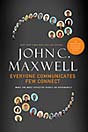
In his book, Everyone Communicates Few Connect, John Maxwell writes about five principles in connecting with others, and five practices one can use in establishing that connection. Today, I am going to discuss only one of those topics: the practice of keeping it simple. Or, AKA – The Art of Simplicity.
“We know that communication is a problem, but the company is not going to discuss it with the employees.” AT&T memo
There is much information found in the chapter titled, “Connectors Do the Difficult Work of Keeping it Simple” So, I may not do the chapter justice by only concentrating on just five observations under this title. However, these are very practical and can be beneficial to you, the reader.
The first observation in keeping communication simple is: Talk to people, not above them.
The Apple Story
In his book, John shares a story that drives home the point about talking to people. I call it the “apple story.”
There was a young boy eating an apple in the backseat of the car. “Daddy, “ he said, “why is my apple turning brown?” The boy’s father explained: “Because after you ate the skin off, the meat of the apple came in contact with the air, which caused it to oxidize, thus changing its molecular structure and turning it into a different color.” There was a long silence, and then the boy asked, “Daddy, are you talking to me?”
When we are communicating, we must learn to talk to people, not above them; not over their heads. This is something that has happened to me many times. Whether I was the one communicating or the one being communicating to I have experienced both. One time, working at a company located down town, I spent some of my time training new hires to the department. I would use company jargon in my training, or talk about an unfamiliar topic. Both caused some confusion. So, I needed to adjust my communication to make sure I was understood by both the current and future new hires.
Greater complexity is never the answer in communication – if you are wanting to connect, according to John Maxwell. Oscar Wilde once wrote: “I am so clever that sometimes I don’t understand a single word of what I am saying.”
Are you a good connector? Are you a good communicator? Do you have stories about talking to people vs. talking above them? Has that happened to you, regardless of if you were the sender or the receiver? Let me know your feedback.
In the next few weeks, we will be looking at the other four observations from this chapter. I am looking forward to it.